Theatres
Audiences are gathered, timed and visible. Commercial exhibition remains legal.
Enter The Transmission Era
In this America, moving pictures are legal in public rooms and forbidden at home. One murdered federal counsel. One damaged recording. One family drawn into a government story written before the blood was dry.
A meticulously researched alternate history
The Transmission Era begins with one fictional change to postwar America: the Aldridge Act keeps moving images out of private homes while licensed public rooms and certified radio dominate national life. Everything that follows is constructed against the real pressures of the period rather than a generic idea of “the 1960s.”
The series draws on the language and working habits of congressional statutes, municipal licensing, housing inspection, public-record routing, civil-service offices, early television, network radio, urban renewal, newsreel exhibition and the 1960 presidential campaign. The research determines how an inspector enters a building, how a clerk protects or diminishes a fact, how a broadcast is cued, how an image receives official permission and how a family can become an administrative problem without ever being charged with a crime.
The Aldridge Act and Household Inspection Report are fictional records from that world. They are presented openly as fiction, but their forms, procedures, contradictions and institutional vocabulary are designed to feel as if they passed through real postwar offices.
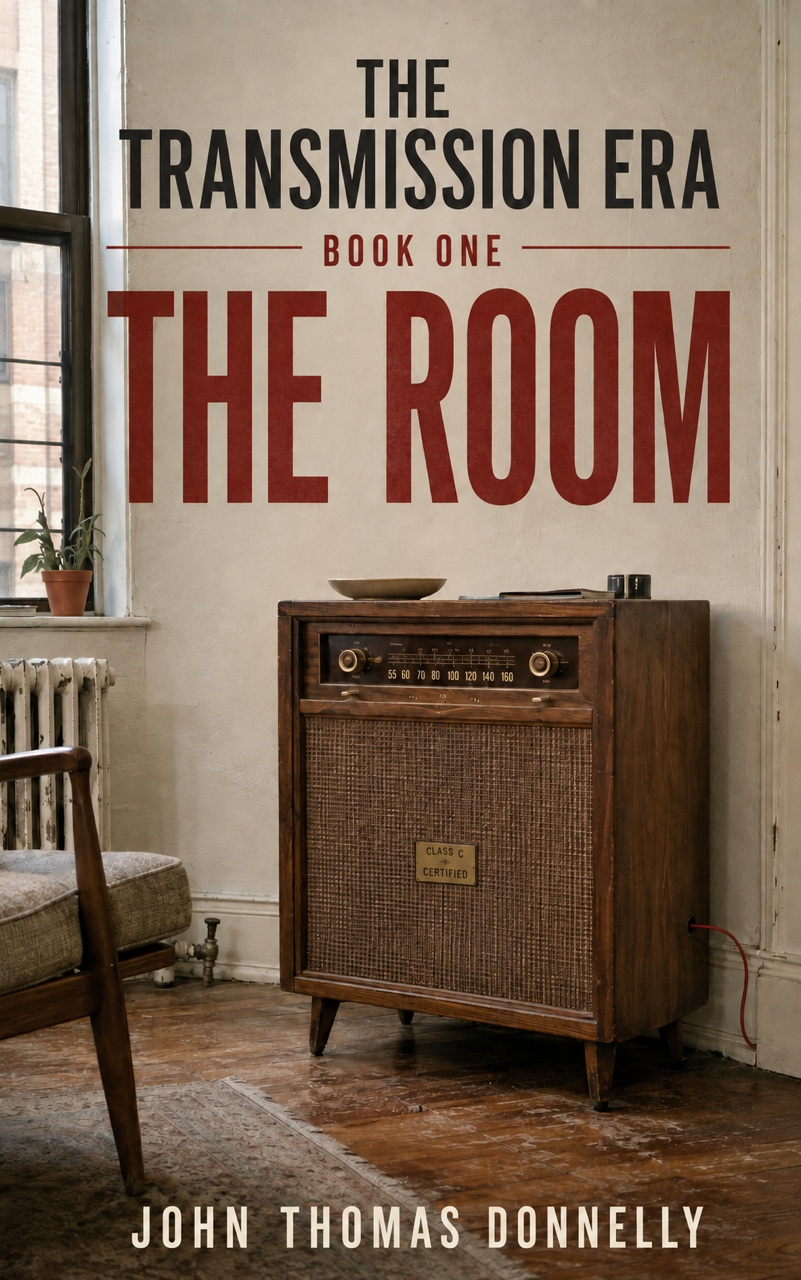
Series preview cover
Book One · Available now
The radios listen.
In 1963 alternate America, the Aldridge system keeps moving images out of private homes. Certified household receivers carry approved sound—and listen back. Visits called random arrive with consequences already prepared.
Walter Miller begins with three household recordings. Charlotte “Charlie” Prudhomme follows the routing numbers. Ellen Dallow and the Water Street households discover that redevelopment and receiver surveillance are parts of the same operation.
Book One reaches a decisive end: Water Street was not simply misreported. It was prepared for. The state’s language was waiting before the facts had finished happening.
THE RECORD SURVIVED
NOW THEY HAVE TO SURVIVE IT
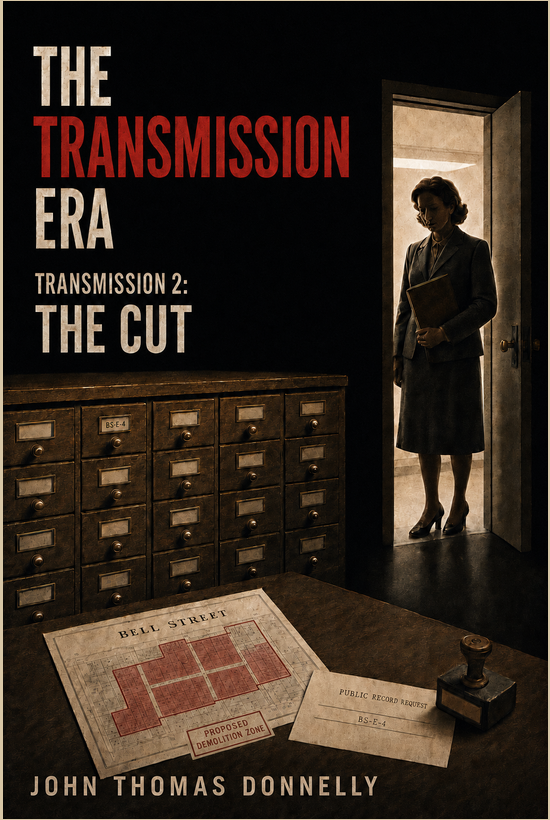
Book Two · Forthcoming January 15, 2027
Clara Voss. Water Street. 1964. The record is no longer merely evidence; it is the place where responsibility is assigned.
The Cut follows the administrative consequences of Water Street: correction, attribution, public-source requests and the human cost of making a record usable.
Book Two continues The Transmission Era through Clara Voss and the surviving Water Street record.
Saul Brenner understands how a national broadcast is cued. Marion Price possesses a voice the system cannot fully contain. Nicky Sloane knows where imitation ends and complicity begins. Together with Clara, Caleb, Ruth and the Dallows, they widen Charlie Prudhomme’s murder into something larger: a struggle over who gets to edit the memory of a country.
The continuation: The Cut begins with the consequences of Book One, drives every returning character into a more dangerous choice, and moves the series closer to the forbidden composite transmission that could break the nation’s radio monopoly.
Series preview cover
The world law
Under the Aldridge Act, a moving image is legal in a theatre, courtroom, school, hospital or approved church. Put the same image in a living room and it becomes a civic offence.
Audiences are gathered, timed and visible. Commercial exhibition remains legal.
Instruction and evidence may move only when an institution controls the room.
Approved rooms may show moving images under certified supervision.
The sofa is the problem. An image seen without witnesses, schedule or permission becomes illegal.
Chronology
Moving images remain legal in licensed public rooms. Private homes are restricted to certified sound.
Richard Nixon defeats John F. Kennedy in a campaign governed by radio, access and control of the national voice.
Walter Miller, Charlie Prudhomme, Ellen Dallow and the Water Street households uncover the link between redevelopment, receiver surveillance and consequences prepared in advance.
The Water Street operation has been exposed. Book Two turns the government’s counterattack into the next transmission.
ALDRIDGE / DOMESTIC IMAGE / 1950
Unauthorized household moving-image reception is prohibited. Certified sound remains lawful.
READ APPROVED COPYHOUSEHOLD INSPECTION / 63-031
Unlicensed evidence of motion reported through a household drawing.
READ INSPECTION REPORTThe people
A family whose home becomes evidence after their seven-year-old son draws a horse in motion.
They move paper, tape and testimony through a city built to stop all three.
A records worker who knows exactly how an official sentence can shrink a fact without deleting it.